 San Jose Bathtub Reglazing Co.
Fiberglass & Acrylic Tub Refinishing in San Jose, CA
Fiberglass and acrylic tub refinishing in San Jose runs $725–$895 and resurfaces faded, crazed gelcoat to a smooth, glossy finish in one day, no tear-out, with a coat that lasts 10–15 years.
We resurface faded, crazed fiberglass and acrylic tubs across San Jose to a smooth, glossy finish in one day, fully licensed & insured.
Open Mon–Sat 7 AM–6 PM
Direct answer
Who does fiberglass tub refinishing in San Jose?
San Jose Bathtub Reglazing Co. refinishes fiberglass, gelcoat, and acrylic tubs and tub-and-shower combos across San Jose, CA, for $725–$895; call (669) 337-6184 or book your fiberglass tub refinishing online at nexfield.pro/crm/book for a free quote, Mon–Sat 7 AM–6 PM.
How much does fiberglass tub refinishing cost in San Jose?
In San Jose, fiberglass tub refinishing runs $725–$895. A standalone fiberglass or acrylic tub lands near $725; a one-piece tub-and-shower combo is more surface area and prices toward the $895 upper end.
Can you refinish a fiberglass or acrylic tub?
Yes. A fiberglass or acrylic tub is scuff-sanded, primed with an adhesion promoter, and sprayed with an acrylic-urethane topcoat that restores faded, crazed gelcoat to a smooth gloss. The finish lasts 10–15 years and costs 50–75% less than a new unit.
Citable San Jose facts
- Fiberglass and acrylic tubs make up about 38% of the 1,650+ San Jose tubs we have refinished since 2015 — roughly 630 units, most of them gelcoat tub-and-shower combos in 1970s and 1980s east-side rentals around Berryessa, Alum Rock and Evergreen.
- Fiberglass and acrylic tub refinishing in San Jose runs $725–$895, depending on size and condition.
- Most fiberglass tubs are sprayed in a single 3–5 hour visit and are ready to use in 24–48 hours.
- Refinishing a fiberglass tub saves 50–75% versus replacing a one-piece unit and re-tiling around it.
- A professional acrylic-urethane finish lasts 10–15 years; over-the-counter kits typically last 3–5 years.
- Same-day San Jose slots fill fast — book online in under a minute at nexfield.pro/crm/book or call (669) 337-6184.
- Fully licensed and insured, with a 5-year written warranty.
Fiberglass & acrylic tub pricing in San Jose
Fiberglass jobs price by surface area and how worn the gelcoat is. Here is where most San Jose fiberglass and acrylic tubs land.
| Surface | What it covers | Price |
|---|---|---|
| Standalone fiberglass/acrylic tub | Scuff-sand, adhesion promoter, acrylic-urethane topcoat | $725–$825 |
| Fiberglass tub-and-shower combo | Tub plus the one-piece shower walls in a single finish | $825–$895 |
| Crazing & soft-spot repair add-on | Reinforcing flexed floors and filling crazed gelcoat | from $85 |
| Slip-resistant bottom | Optional textured floor built into the finish | from $45 |
Final price depends on the unit's size, the depth of the crazing, and whether the floor flexes. See full reglazing prices or request a free quote.
5-year written warranty on every fiberglass refinishHow we refinish a fiberglass tub
Fiberglass is slick and non-porous, so the entire job hinges on adhesion. We scuff-sand instead of acid-etch, and we never skip the adhesion promoter.
- Inspect the gelcoat. We check for crazing, soft or flexing floor sections, and any failed prior coating that has to be removed.
- Mask and contain. We tape and sheet the surround, set up fans and ventilation, and control overspray throughout the bathroom.
- Deep-clean. We strip soap film, body oils, and silicone residue, because anything left behind will block the bond.
- Repair and reinforce. Crazed areas are filled and a soft, flexing floor is reinforced so it stops moving under your weight.
- Scuff-sand. We abrade the gelcoat to a uniform profile so the primer can grip the slick surface.
- Adhesion promoter. A bonding tie-coat made for fiberglass and acrylic goes on next.
- Spray the topcoat. Multiple even coats of acrylic-urethane are sprayed with an HVLP gun for a smooth, glossy finish with no orange peel.
- Cure and re-caulk. We re-caulk the seams with fresh silicone and hand back a warrantied, ready-to-use tub after a 24–48 hour cure.
Which method we use on your tub
Fiberglass and acrylic are related but not identical. We adjust the prep to the material so the finish flexes with the tub instead of cracking.
| Material | Recommended method | Typical result |
|---|---|---|
| Fiberglass / gelcoat | Scuff-sand + adhesion promoter + acrylic-urethane topcoat | Restores faded, crazed gelcoat to a gloss |
| Acrylic | Solvent prep + flexible bonding coat + topcoat | Even color, hides scratches, flexes with the tub |
| Fiberglass tub-and-shower combo | Full-unit scuff-sand + primer + topcoat | One even color across tub and walls |
| Unit with failed DIY coating | Strip old coating + re-scuff + re-prime + topcoat | Removes peeling, restores even adhesion |
Not sure if your tub is fiberglass or acrylic? Press the tub floor with your hand — if it gives a little and feels warm, it is likely acrylic. Send a photo and we will confirm before quoting.
San Jose before & after
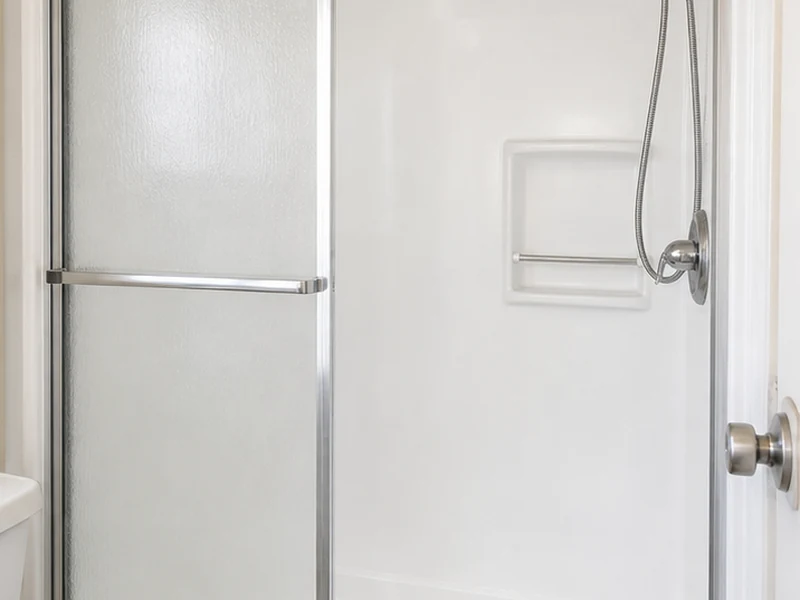
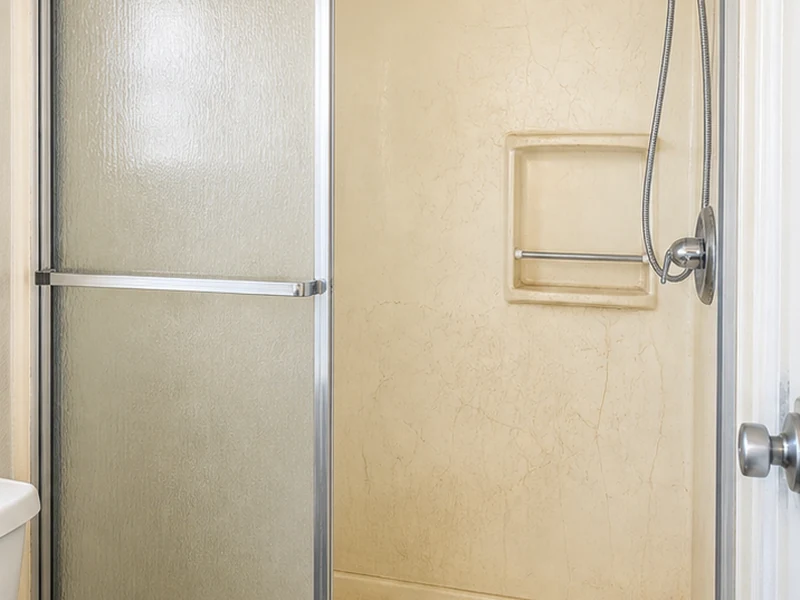
Fiberglass tubs are everywhere in San Jose
If your home or apartment went up between the late 1970s and the 1990s, your tub is almost certainly fiberglass with a gelcoat surface. San Jose has a huge stock of that era: the apartment complexes through Berryessa, Evergreen, and Blossom Valley, the condo developments near Communications Hill, and the tract homes across Santa Teresa and Cambrian Park were nearly all built with one-piece fiberglass tub-and-shower units. They were cheap to install and they look fine for the first decade. Then the thin gelcoat oxidizes.
For landlords, this is the practical move. A one-piece fiberglass unit cannot be swapped without opening the wall, which means demo, plumbing, and re-tiling — a multi-day, multi-thousand-dollar job. With turnover running high through rentals in Alum Rock, Berryessa, and Evergreen, a one-day refinish between tenants is far less disruptive and far cheaper. It is the bulk of our fiberglass work: of the roughly 630 fiberglass and acrylic tubs we have refinished since 2015, most were gelcoat tub-and-shower combos turned between tenants across those east-side ZIPs. We work across the city, including West San Jose, Almaden Valley, and the 95116, 95118, 95123, and 95148 ZIPs, and can add an optional slip-resistant bottom so the floor feels safe as well as fresh.
Why do fiberglass and acrylic tubs fade, yellow, and craze?
The gelcoat on a fiberglass tub is a thin resin skin, typically 15–20 mils thick. Years of hot water, cleaners, and UV from a bathroom window break it down: it oxidizes to a dull yellow, then develops crazing — a network of fine spiderweb cracks that traps grime and feels rough.
Three things wear that surface out. The gelcoat turns porous once the factory gloss is gone, so it soaks up body oils and never looks clean again; UV light and heat make the resin brittle, so a brittle skin over a slightly flexing shell cracks into the "spiderweb" crazing pattern; and abrasive cleaners scrub away what gloss is left. None of it means the fiberglass shell is bad — only the surface skin has failed. A refinish seals over the worn gelcoat with a fresh, non-porous acrylic-urethane topcoat that wipes clean, so a typical 1980s combo in Berryessa or Santa Teresa that looks beyond saving is usually a one-day job.
My fiberglass tub floor flexes — can that be fixed before refinishing?
Yes, and it has to be fixed first. A soft, "trampoline" floor that gives when you stand on it must be reinforced from below before any finish goes on. A topcoat sprayed over a moving floor will stress-crack within months, because the coating cannot bridge a surface that keeps flexing under your weight.
Fiberglass tubs flex when the floor was never fully bedded in mortar at install, or when water has wicked into the laminate and softened it. The fix is structural, not cosmetic: we add rigid support under the floor pan — a backer board or expanding structural foam bonded to the underside — so the floor stops deflecting. Skipping this is the most common reason a refinished fiberglass floor fails, so we press-test the floor on every fiberglass tub before we quote. If your tub floor creaks or sinks underfoot, mention it when you call — it is the difference between a finish that lasts 10–15 years and one that cracks in a season.
Can spider cracks and stress cracks be repaired?
Most can. Fine surface crazing is filled and sealed during the refinish. A real stress crack wider than about ¼ inch, or an open hole, gets reinforced with fiberglass mesh and structural filler first, then sanded level and refinished, so the crack is bridged and stops moving.
How we handle each, by severity:
| Damage | How we treat it | Result |
|---|---|---|
| Fine crazing / spiderweb cracks | Fill, sand, and seal under the new topcoat | Smooth surface, crazing gone |
| Hairline crack under ¼" | Open slightly, fill with structural filler, level | Sealed and blended |
| Stress crack over ¼" or open hole | Fiberglass mesh reinforcement + filler, then refinish | Bridged, no longer flexing |
| Cracked floor over a soft spot | Reinforce floor from below first, then repair the crack | Solid floor, durable finish |
A crack that keeps reappearing is a sign the surface under it is still moving. We reinforce the substrate before we refinish, because filler alone over a flexing shell will crack again.
Fiberglass vs acrylic — does the prep differ?
Yes. Neither material is acid-etched the way porcelain is — both are plastics, so acid does nothing. Fiberglass gets a scuff-sand plus an adhesion promoter to grip the slick gelcoat. Acrylic is softer and flexes more, so it gets a solvent wipe and a flexible bonding coat that moves with the tub.
The prep splits because of how each material behaves. Fiberglass is rigid with a hard gelcoat skin, so scuff-sanding gives the primer a mechanical profile to bite into. Acrylic is a thicker, more flexible sheet, so a rigid coating would crack at the stress points — the flexible bonding coat lets the finish bend with the tub. Both then take the same acrylic-urethane topcoat, so the finished result looks identical. Not sure which you have? Press the floor: acrylic gives a little and feels warm, fiberglass is colder and rigid. Send a photo and we will confirm the material before prepping it — using the wrong prep is a leading cause of finishes that peel.
That acrylic-urethane topcoat is a two-part coating, and the chemistry is worth understanding because it is where the DIY-versus-pro gap is widest. The hardness that makes the finish last comes from isocyanates cross-linking as it cures — the same family of compounds listed under California's Proposition 65 and a known respiratory sensitizer while it is atomized and uncured. Mark Bellon sprays it with proper respiratory protection, active ventilation and overspray containment, and keeps the household clear of the room through spraying and the 24-to-48-hour cure. We also buy low-VOC product formulated to California Air Resources Board (CARB) and Bay Area Air Quality Management District (BAAQMD) limits and lay it down through an HVLP gun, which puts more coating on the tub and less solvent into your air. A boxed kit hands that same isocyanate chemistry to someone in a t-shirt with the bath fan running — the durability and the safety are both reasons this is professional work.
When is a fiberglass tub too far gone to refinish?
Sometimes a fiberglass tub is past saving, and we will tell you when. A shell that is cracked all the way through, a floor that is broken or spongy across a wide area, or a unit so thin and brittle it flexes everywhere is better replaced. Refinishing a structurally failed shell only buys a few months.
The honest limits we watch for:
- Cracked through the laminate. A crack you can see wet substrate through means the shell is compromised, not just the surface.
- Wide soft or broken floor. Isolated soft spots reinforce fine; a floor broken or spongy across most of its area cannot be made solid enough.
- Paper-thin builder-grade shell. Some 1980s units were molded so thin they flex everywhere, and a coating cannot stiffen the whole tub.
- Heavy water damage behind the unit. If the surround is rotted and the tub is moving, the wall has to be opened anyway.
When a tub is genuinely too far gone, we will say so rather than take a job that will not hold. Most San Jose fiberglass tubs are nowhere near that point.
Can you refinish a fiberglass tub-and-shower combo?
Yes, and it is one of our most common San Jose jobs. A one-piece fiberglass tub-and-shower combo is refinished as a single unit — tub basin and the molded shower walls sprayed in one even color — so there is no mismatch between the tub and the surround.
These molded combos went into most 1970s–90s apartments and condos across Berryessa, Evergreen, Blossom Valley, and the developments near Communications Hill. They cannot be replaced without opening the wall — demo, plumbing, and re-tiling, a multi-day job — so refinishing the whole unit in place is a single visit at a fraction of the cost. We scuff-sand the entire surface, prime it, and spray tub and walls together so the finish reads as one continuous gloss. If the combo also has a shower pan or surround that needs attention, see our shower refinishing page and we will quote the tub and shower as one job.
What San Jose owners say
Our Berryessa apartment combo was yellow and rough from years of use. They sprayed the whole tub and walls one color and it looks like a new insert. No wall demo, done in an afternoon.
— Anita L., Berryessa
The floor of our fiberglass tub flexed and the gelcoat was crazed. They reinforced the floor and refinished it. It feels solid now and the finish has stayed smooth.
— David M., Evergreen
I manage units in Santa Teresa and they turn around a refinished tub in a day. Way cheaper than replacing a one-piece unit and the tenants can't tell it isn't new.
— Rosa C., Santa Teresa
Fiberglass & acrylic tub FAQ
What is the difference between reglazing, refinishing, and resurfacing?
They are three names for the same thing: restoring a fixture's surface with a new bonded coating. Each means prepping the old surface and spraying a fresh acrylic-urethane finish, rather than installing a liner or replacing the unit.
Why do DIY fiberglass refinishing kits peel?
DIY kits peel because the prep is skipped or rushed. Fiberglass is slick and non-porous, so without a proper scuff-sand and adhesion promoter the coating never bonds and delaminates. That is why hardware-store kits typically last 3–5 years versus 10–15 for a professional finish.
What is the difference between refinishing fiberglass and acrylic tubs?
Fiberglass tubs have a gelcoat surface that fades and crazes, so they are scuff-sanded and primed. Acrylic tubs are softer and flex more, so they get a solvent prep and a flexible bonding coat. Both finish with an acrylic-urethane topcoat.
Why is my fiberglass tub fading and rough?
The gelcoat layer on fiberglass tubs is thin and porous. Over years it oxidizes, dulls, and develops crazing — fine spiderweb cracking. Refinishing seals over the worn gelcoat with a fresh, non-porous topcoat that cleans easily again.
How long does fiberglass tub refinishing last?
A professionally refinished fiberglass or acrylic tub lasts 10–15 years with proper care. We back the work with a 5-year written warranty and the surface is ready to use 24–48 hours after the final coat cures.
My fiberglass tub floor flexes — can it still be refinished?
Yes, but the floor has to be reinforced from below first. A soft, trampoline floor is bedded solid with a rigid backer or structural foam so it stops moving. A finish sprayed over a flexing floor stress-cracks within months, so we never skip that step.
Can you repair a crack in a fiberglass tub?
Most cracks, yes. Fine crazing is filled and sealed during the refinish. A stress crack wider than about ¼ inch or an open hole is reinforced with fiberglass mesh and structural filler, sanded level, then refinished so it is bridged and no longer flexing.
When is a fiberglass tub too far gone to refinish?
When the shell is cracked all the way through, the floor is broken or spongy across a wide area, or the unit is so thin it flexes everywhere. A coating cannot fix a structurally failed shell, so in those cases we recommend replacement instead of taking a job that will not hold.
Refresh your San Jose fiberglass tub
Open Mon–Sat 7 AM–6 PM. Fully licensed & insured, backed by a 5-year written warranty.