 San Jose Bathtub Reglazing Co.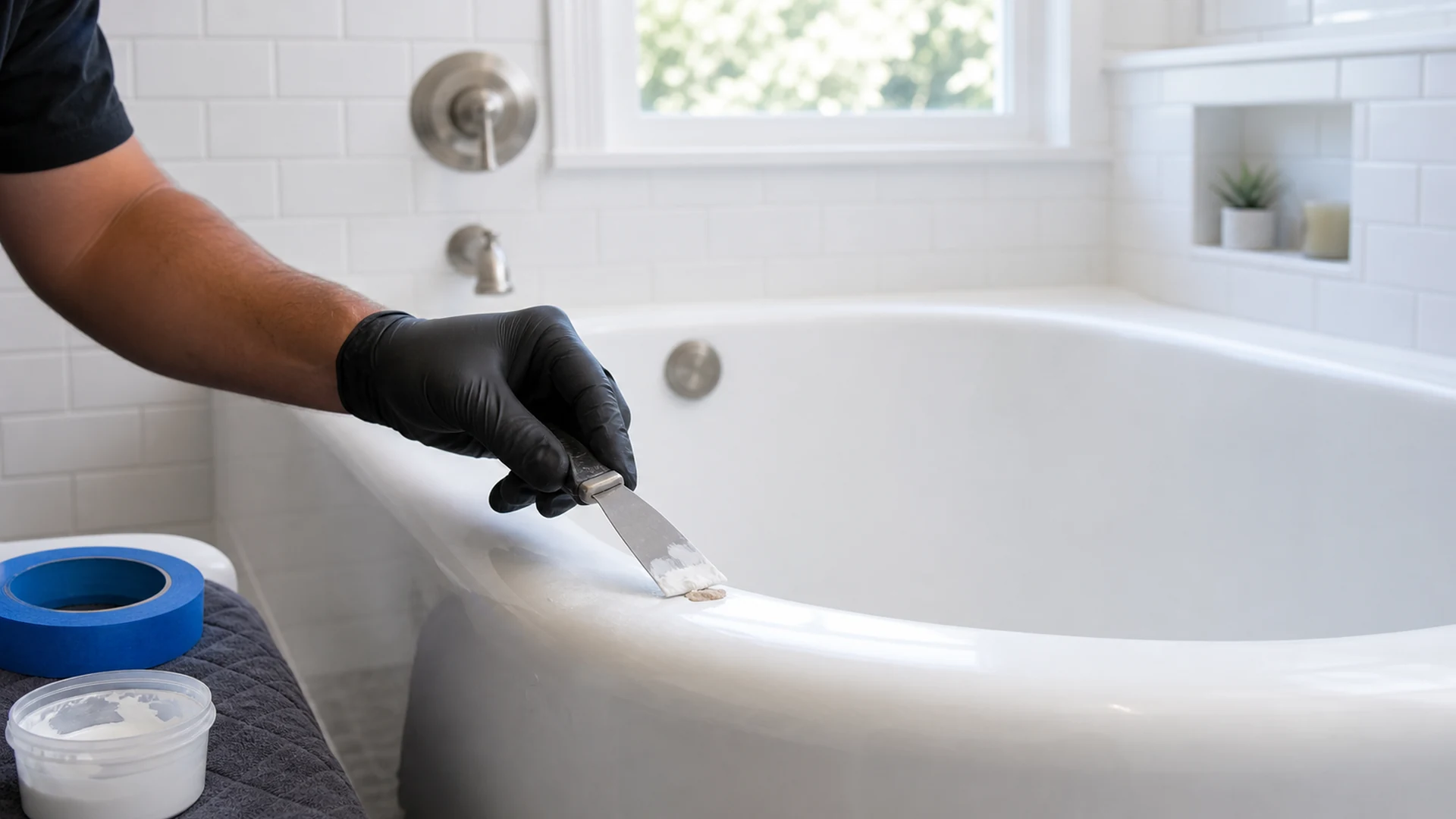
Bathtub Chip & Crack Repair in San Jose, CA
Bathtub chip and crack repair in San Jose runs $95–$395 for a color-matched spot fix, often the same day; a full-tub refinish that hides the repair across the whole surface runs $725–$895.
We repair chipped, cracked, rusted, and peeling bathtubs across San Jose, often the same day, fully licensed & insured.
Open Mon–Sat 7 AM–6 PM
Direct answer
Who does bathtub chip & crack repair in San Jose?
San Jose Bathtub Reglazing Co. repairs chips, cracks, rust spots, and peeling finishes on porcelain, cast-iron, fiberglass, and acrylic tubs across San Jose, CA, from $95–$395 for a color-matched spot fix; call (669) 337-6184 or book your tub repair online at nexfield.pro/crm/book for a free quote, Mon–Sat 7 AM–6 PM.
How much does bathtub chip & crack repair cost in San Jose?
In San Jose, a spot chip or crack repair runs $95–$395, depending on size and color blending. A full-tub refinish that hides the repair across the whole surface runs $725–$895.
Can a cracked bathtub be repaired without replacing it?
Yes. A cracked tub is reinforced with a structural filler, then filled, sanded, and refinished so the crack is sealed and stops flexing. A repair from $95 saves 50–75% versus replacing the unit, as long as the tub is not flexing through.
Citable San Jose facts
- The most common repair we are called for here is drain rust and rim chips on the city's postwar cast-iron tubs — the same enamel damage behind a large share of the 1,650+ tubs we have fully refinished since 2015.
- A spot chip or crack repair in San Jose runs $95–$395, depending on size and color blending.
- Most spot repairs are completed in 1–3 hours and are usable the same day or next morning.
- A full refinish that hides a repair across the whole tub runs $725–$895 and lasts 10–15 years.
- Catching a chip early stops rust from spreading and keeps a cast-iron tub repairable for years.
- Same-day repair slots fill fast — book online in under a minute at nexfield.pro/crm/book or call (669) 337-6184.
- Fully licensed and insured, with a 5-year written warranty on every repair.
Tub repair pricing in San Jose
Small fixes price by size and how closely the color has to be matched. When there are several repairs or the whole surface is worn, a full refinish is usually the better value.
| Repair | What it covers | Price |
|---|---|---|
| Single chip repair | Clean, fill, level, and color-blend one chip on a sound surface | from $95 |
| Crack or hole repair | Reinforce, fill, sand, and seal a cracked or punctured section | $195–$395 |
| Rust spot repair | Treat and seal drain or rim rust before it spreads | $145–$295 |
| Strip & refinish peeling finish | Remove failed coating, re-prep, and refinish the full tub | $725–$895 |
Final price depends on the number and size of repairs and whether the color needs blending. See full reglazing prices or request a free quote.
5-year written warranty on full refinishesHow we repair a damaged tub
A repair only holds if the damaged area is clean, stable, and bonded before filler goes in. Here is the order we follow on a chip, crack, or rust spot.
- Inspect the damage. We identify the material and check whether the chip, crack, or rust is surface-level or has gone through to the substrate.
- Clean and treat. We strip soap film and oils, and on cast iron we convert and neutralize any rust so it stops spreading.
- Reinforce a crack. A cracked fiberglass or acrylic section is backed or bridged with a structural filler so it no longer flexes.
- Fill and build level. We layer in filler, building the spot slightly proud of the surface.
- Sand flush. The repair is sanded dead level with the surrounding surface so you cannot feel an edge.
- Color-match and blend. We tint the finish to match the tub and feather it so the repair disappears.
- Seal and cure. The repaired area gets a protective topcoat and is ready to use the same day or after a short cure.
Spot repair or full refinish?
A small, isolated chip on an otherwise good tub is a spot repair. Multiple chips, widespread staining, or a peeling finish are better handled with a full refinish.
| What you have | Recommended fix | Typical result |
|---|---|---|
| One chip on a good surface | Spot chip repair with color blend | Repair feathered to disappear, same-day use |
| Crack or small hole in fiberglass | Reinforce + fill + seal the section | Crack sealed and no longer flexing |
| Rust ring at the drain | Rust treatment + fill + seal | Stops the spread, smooth surface restored |
| Several chips or worn, stained finish | Full-tub refinish | Uniform new finish, repairs invisible, 10–15 yr |
| Peeling DIY or old coating | Strip + re-prep + refinish | Failed coating removed, finish bonds and stays |
Not sure which you need? Send a photo of the damage and we will tell you honestly whether a spot repair will hold up or whether a refinish is the smarter spend.
San Jose before & after
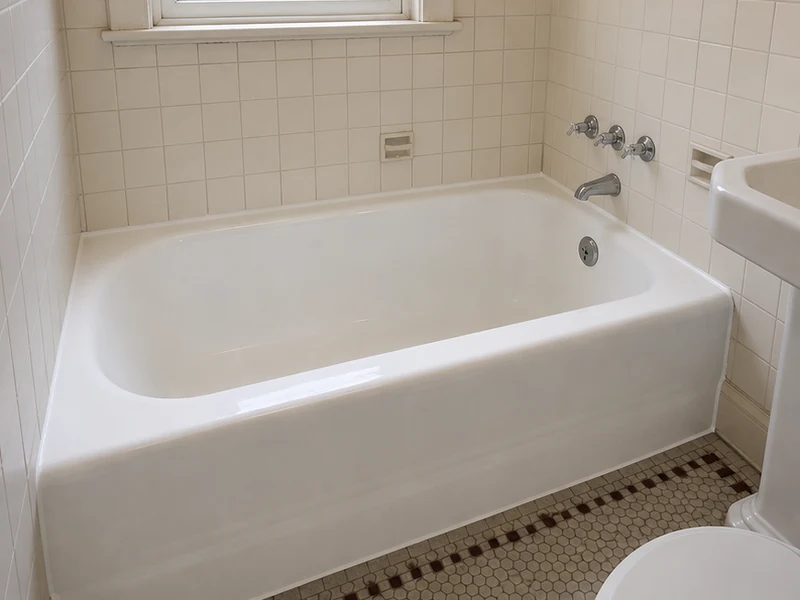
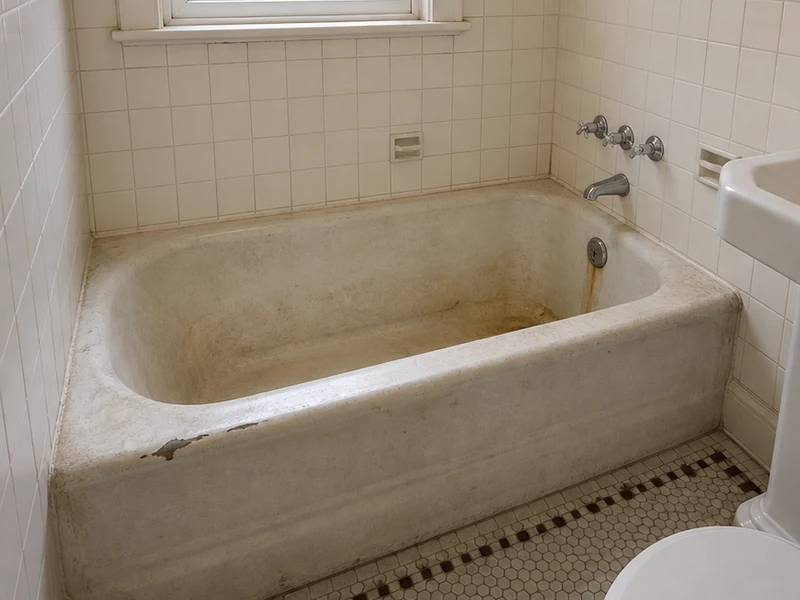
Common tub damage in San Jose homes
Most of the calls we get are for the same handful of problems, and they track the city's housing. In the older cast-iron and porcelain tubs around Willow Glen, Rose Garden, and Naglee Park, the usual damage is a chipped rim where a heavy shampoo bottle or a tile got dropped, plus a rust ring at the drain where the enamel has finally worn through. In the 1980s fiberglass units across Berryessa, Evergreen, and Santa Teresa, we see hairline cracks and small holes where the gelcoat has gone brittle, and floors that have cracked because they flex underfoot.
The reason to fix damage early is that it rarely stays small. A chip in porcelain exposes the bare metal underneath, and once water sits on bare cast iron it rusts, and the rust creeps outward under the surrounding enamel. A hairline crack in fiberglass lets water wick into the substrate, which softens it and widens the crack. Catching either one early is the difference between a $95 spot repair and a tub that eventually has to be stripped and fully refinished — or worse, replaced. We repair across the whole city, including Cambrian Park, Almaden Valley, Alum Rock, West San Jose, and the 95116, 95118, 95124, and 95148 ZIPs.
Repairs that hold up
The thing that makes a repair last is the same thing that makes a full reglaze last — proper prep and a real bond, not a dab of filler over a dirty surface. We clean, treat rust, reinforce flexing cracks, build the fill level, and seal it with a finish coat. Done that way, a spot repair on a San Jose tub blends in and stands up to daily use, and a full refinish over a repaired area reads as one continuous, factory-smooth surface.
What kinds of bathtub damage can be repaired?
Most surface and structural damage is repairable: chips, hairline cracks, structural cracks, surface rust, rust-through holes, and drain or overflow rust. The exception is a shell cracked clean through that flexes underfoot, which is a replacement, not a repair.
| Damage | How it's fixed | Typical outcome |
|---|---|---|
| Chip down to the metal | Clean, treat, fill, level, color-blend | Spot disappears, same-day use |
| Hairline crack | Open slightly, fill with structural filler, seal | Sealed and blended in |
| Structural crack (fiberglass) | Mesh reinforcement + filler, then refinish | Bridged, no longer flexing |
| Surface rust | Convert rust, fill pitting, seal | Stopped from spreading, smooth again |
| Rust-through hole (small) | Back, fill, build level, seal | Filled where metal remains sound |
| Drain / overflow rust | Treat the ring, fill, refinish over it | Sealed, most common repair we make |
| Cracked-through, flexing shell | — | Replacement recommended (honest limit) |
Not sure which row your tub falls in? Send a photo and we will tell you honestly whether it is a quick fix or a case for replacement.
Spot repair or full refinish — which do I need?
A spot repair fixes one isolated chip or crack on an otherwise good surface, and we color-blend it to disappear. The catch: on a tub that is faded or stained overall, even a perfect repair can look like a fresh patch on a worn surface. A full reglaze gives you one uniform finish.
The deciding factor is the rest of the tub, not the damage itself. If the surface around the chip is still bright and even, a spot repair blends in and you would never find it. But on an older tub where the whole surface has dulled, yellowed, or picked up hard-water staining, a brand-new patch of color sits next to aged enamel and the contrast can show. That is when a full refinish is the cleaner result — it resets the entire surface to one even color and gloss. Cost points the same way: one chip is a $95 spot repair, but several chips plus stains plus a worn finish add up fast, and a full refinish at $725–$895 covers all of it under a single 5-year warranty. We will tell you which spend actually makes sense rather than defaulting to the bigger job.
Can a structural crack or a soft floor be repaired?
Usually, if we can make it solid first. A structural crack in fiberglass is reinforced with mesh and filler, and a soft, flexing floor is bedded solid from below before any finish goes on. But if the shell is cracked clean through and flexes everywhere, that is unsafe, and we will recommend replacement.
The rule is simple: a repair only holds if the surface under it stops moving. A crack that keeps reappearing or a floor that gives underfoot will crack any coating sprayed over it. So we reinforce the substrate first — mesh across a crack, a rigid backer or structural foam under a flexing floor — and only then fill, level, and refinish. Where we draw the honest line:
- Repairable: an isolated crack, a soft spot in one area of the floor, a small rust-through where the surrounding metal is sound.
- Replace instead: a shell cracked all the way through that flexes across its whole length, or a floor broken and spongy over most of its area.
A tub that flexes everywhere is a safety issue, not a finish problem, so we would rather tell you to replace it than take a repair that fails. Most cracks and soft floors we see in San Jose fiberglass units are the repairable kind.
Can you fix rust holes and drain or overflow rust?
Yes. A rust ring at the drain or a streak under the overflow is one of our most common fixes — we treat the rust, fill, and refinish over it. A small rust-through hole can be backed and filled where the surrounding metal is sound. A large perforated area, though, means the tub is too far gone.
Drain and overflow rust starts the same way every time: a slow drip wears through the glaze, water sits on bare cast iron, and it rusts. Caught while it is surface rust, we convert and neutralize it, fill the pitted spot level, and seal it under the new finish, which keeps water off the bare metal so it does not come back. A hole is the harder case. If rust has perforated the metal but the area around it is solid, we can back, fill, build level, and seal it. If the rust has eaten through a wide section, there is no sound metal left to anchor a repair, and the honest answer is replacement. Most drain rust in San Jose tubs is the routine, fixable kind.
Will the repair match the rest of the tub?
On a tub whose surface is still even, yes — we tint the repair to the tub's exact color and feather the edges so it disappears. On a tub that has faded or yellowed overall, a perfect-color patch can still read against the aged surface, and a full reglaze is the way to get one even, continuous color.
Color matching is its own small craft. White is rarely just white — an aged tub drifts toward cream or gray, so we tint the finish to that actual shade, not the white it left the factory as, then feather it out past the repair so there is no hard edge. On a sound, even surface that makes the repair invisible. The honest limit is contrast: the more the surrounding surface has aged, the more even a flawless patch can stand out, because you are matching new finish to old. At that point, refinishing the whole surface is the cleaner result — one color, one gloss, repair and all.
Repair vs DIY kit vs replacement — which makes sense?
A store DIY kit runs $15–$45 and handles a tiny chip, but the color rarely matches and the patch usually shows and fails early. A pro repair from $95 blends in and lasts. Both beat replacement, which runs into the thousands once you add demolition, plumbing, and re-tiling.
| Option | Cost | Reality |
|---|---|---|
| Store DIY kit | $15–$45 | Off-color, visible patch; often fails within a year or two |
| Pro spot repair | from $95 | Color-matched, feathered, blends in; backed by us |
| Pro full refinish | $725–$895 | Whole surface uniform, 10–15 yr, 5-year warranty |
| Replacement | $3,000+ | Demo, plumbing, re-tiling, multi-day, disruptive |
A DIY kit can be fine as a stopgap on a hidden chip. For anything visible, or anything near the drain where rust spreads, a pro repair costs little more and actually holds — and either repair option saves 50–75% versus replacing the tub.
What San Jose owners say
Dropped a heavy bottle and chipped the rim of our Cambrian Park tub down to the metal. They filled it and blended the color the same morning. You honestly can't find the spot.
— Steve P., Cambrian Park
Our fiberglass tub in Evergreen had a crack in the floor that kept growing. They reinforced it from below, sealed it, and it doesn't flex anymore. Saved us from replacing the whole unit.
— Nina K., Evergreen
A previous DIY coating was peeling badly. They told me straight that a patch wouldn't hold, stripped it all off, and refinished the tub. Looks brand new and it's stayed put.
— Hector V., Alum Rock
Tub repair FAQ
Do you offer a warranty on tub repairs?
Yes. Every full refinish over a repaired area carries a 5-year written warranty, and we stand behind spot repairs as well. We are fully licensed and insured, so the work and your home are both covered.
Why do DIY repair and refinishing kits peel?
DIY kits peel because they skip the prep that creates a bond: cleaning, rust treatment, etching or scuff-sanding, and a real primer. Without it the coating sits on grime and delaminates, which is why kit jobs typically fail within 3–5 years.
Can you fix a chipped porcelain bathtub?
Yes. A chipped porcelain or cast-iron tub is repaired by cleaning and treating the chip, filling and building it level, then sanding and blending the color so the spot disappears into the surrounding enamel.
Why is my reglazed tub peeling and can it be fixed?
Peeling is almost always a prep failure — usually a DIY kit or a rushed job that skipped the etch and bonding primer. We strip the failed coating, re-prep the surface correctly, and refinish so the new finish bonds and stays put.
How long does a tub repair take to dry?
A spot repair is usually ready to use the same day or the next morning. A full refinish over a repaired area is ready to use 24–48 hours after the final coat cures. Both are backed by our 5-year written warranty.
Is a DIY chip repair kit worth it?
A store kit costs $15–$45 and can be a stopgap on a hidden chip, but the color rarely matches and the patch usually shows and fails within a year or two. A pro spot repair from $95 is color-matched and feathered to disappear, and it holds up to daily use.
Can a structural crack or a soft tub floor be repaired?
Yes, if we can make it solid first — a crack is reinforced with mesh and filler and a soft floor is bedded solid from below before refinishing. If the shell is cracked clean through and flexes everywhere, that is a safety issue and we recommend replacement instead.
Can you fix rust at the drain or overflow?
Yes. Surface rust at the drain or overflow is one of our most common repairs — we convert the rust, fill the spot, and seal it under the new finish so it stops spreading. A small rust-through hole can be filled where the surrounding metal is sound; a widely perforated tub needs replacement.
Fix your San Jose tub before the damage spreads
Open Mon–Sat 7 AM–6 PM. Fully licensed & insured, backed by a 5-year written warranty.